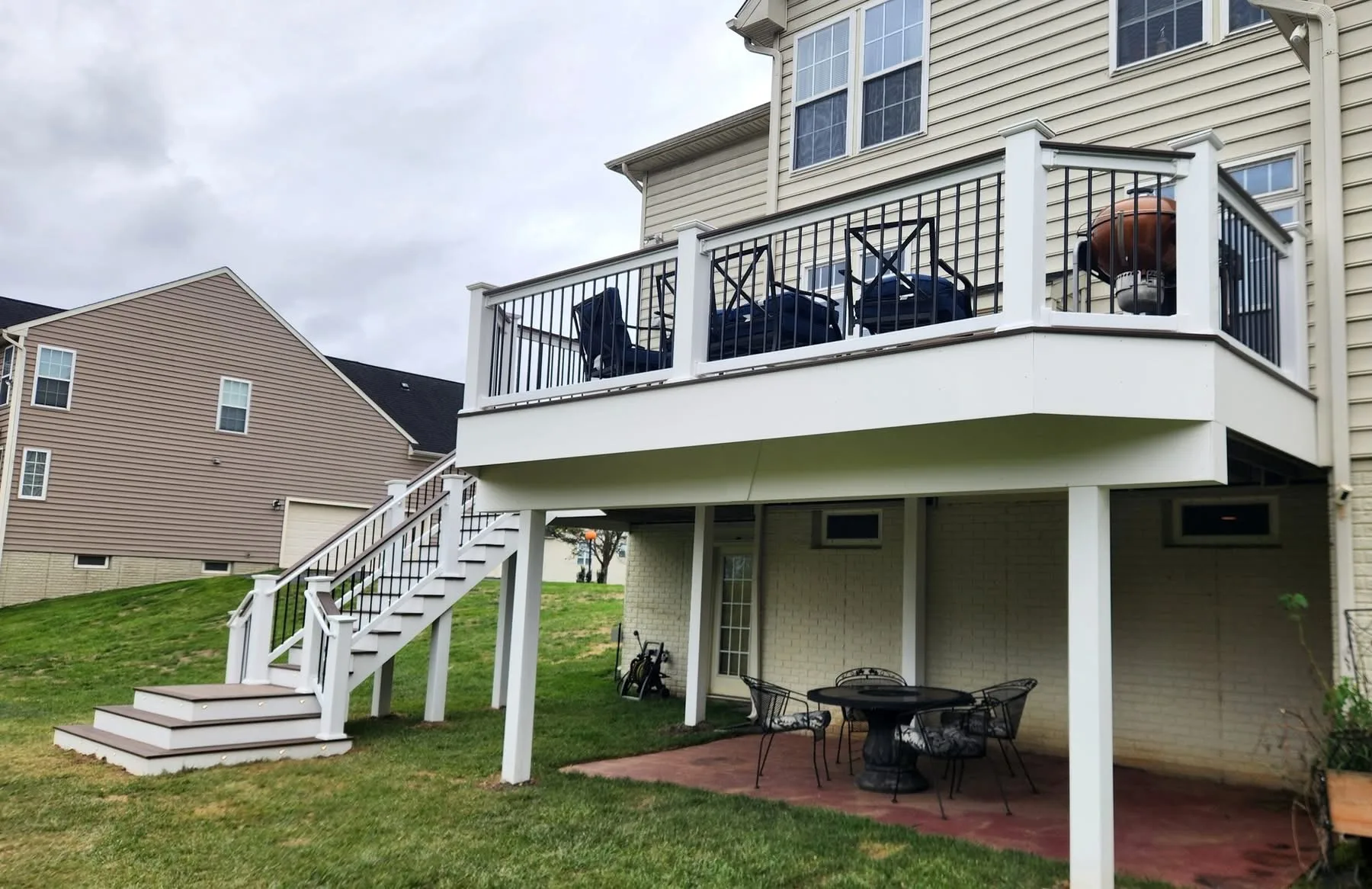
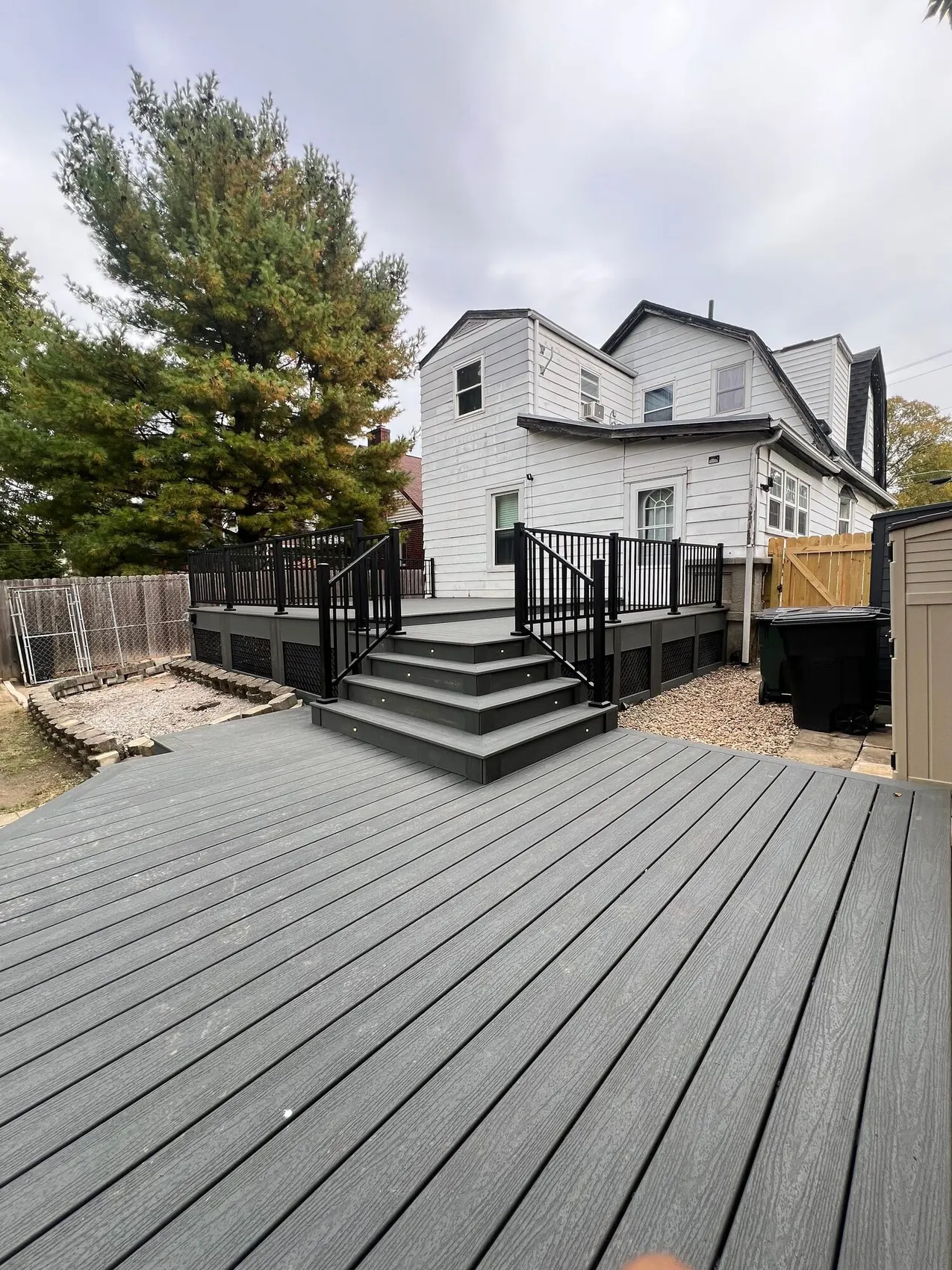
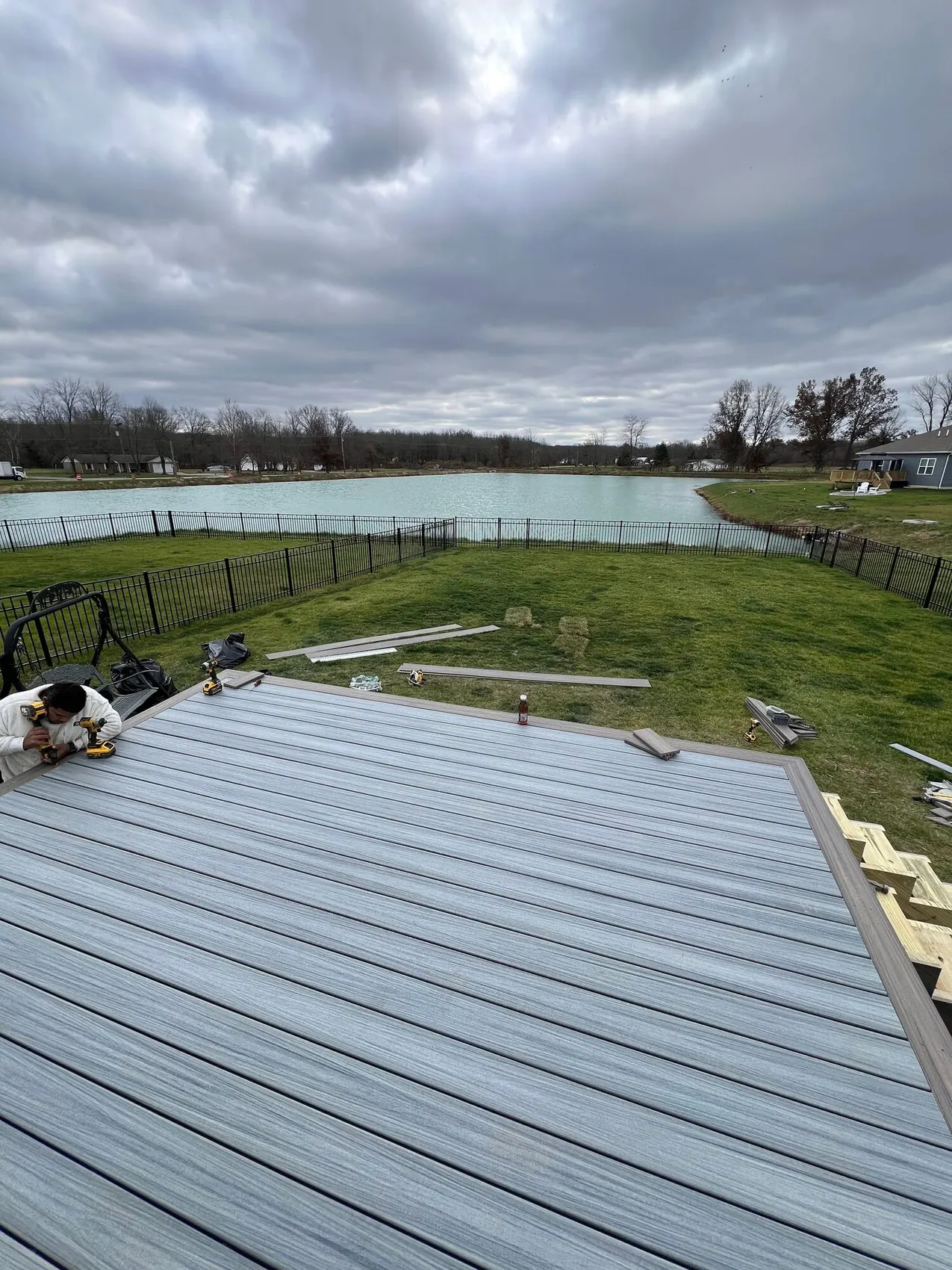
The frame decides how long the deck lasts
Composite boards are heavier and less forgiving than wood, and they need joist spacing set for the specific product and the
direction the boards run. Boards laid on a diagonal need tighter spacing than boards laid square, and that is decided at
framing, not when the decking arrives.
Footings go below the local frost line so the structure is not lifted by a winter of freeze and thaw, which Ohio delivers
reliably every year. Ledger connections get flashed properly, because a ledger that sheds water into the rim joist behind it
will rot the house rather than the deck.
Board layout is a design decision
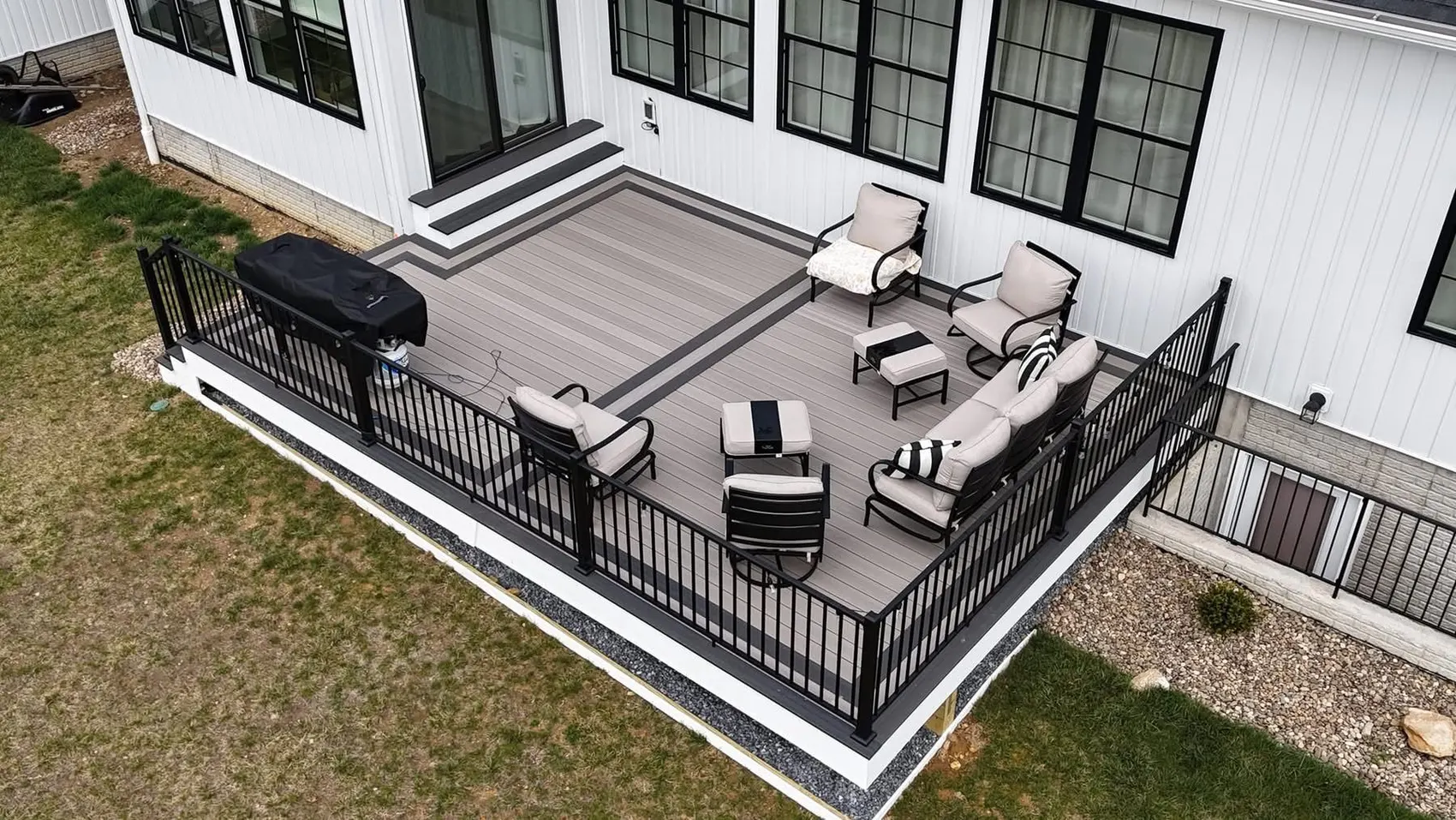
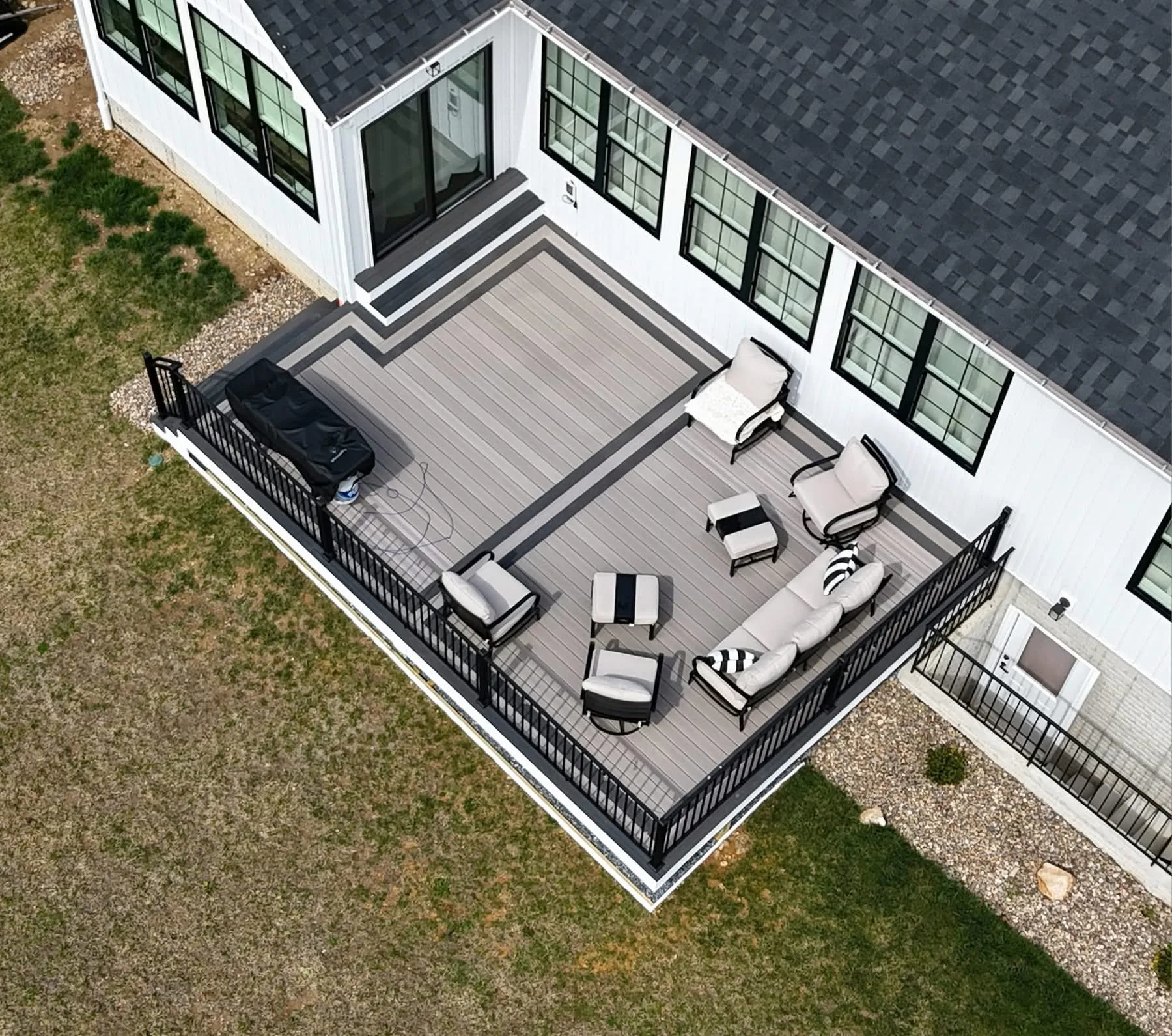
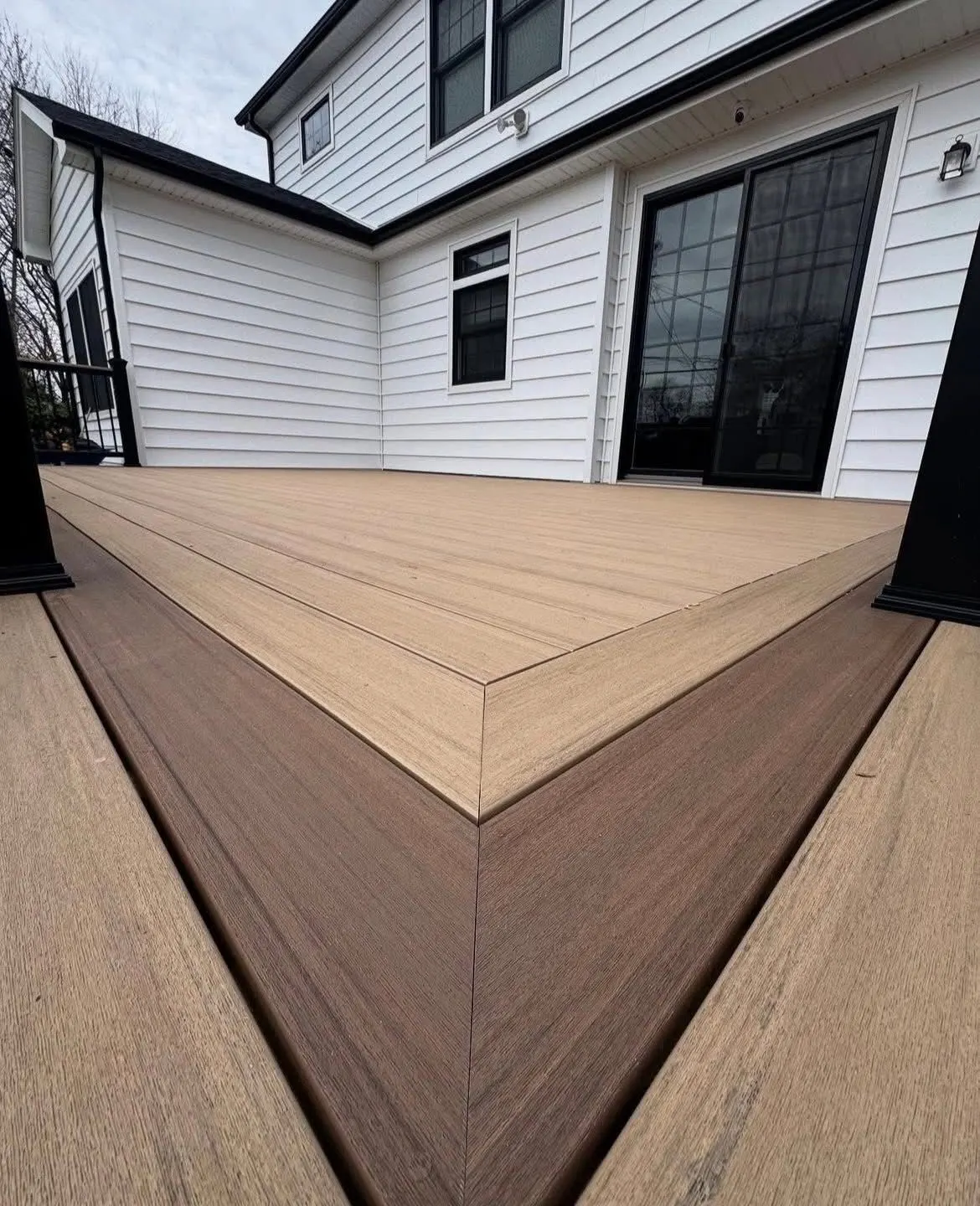
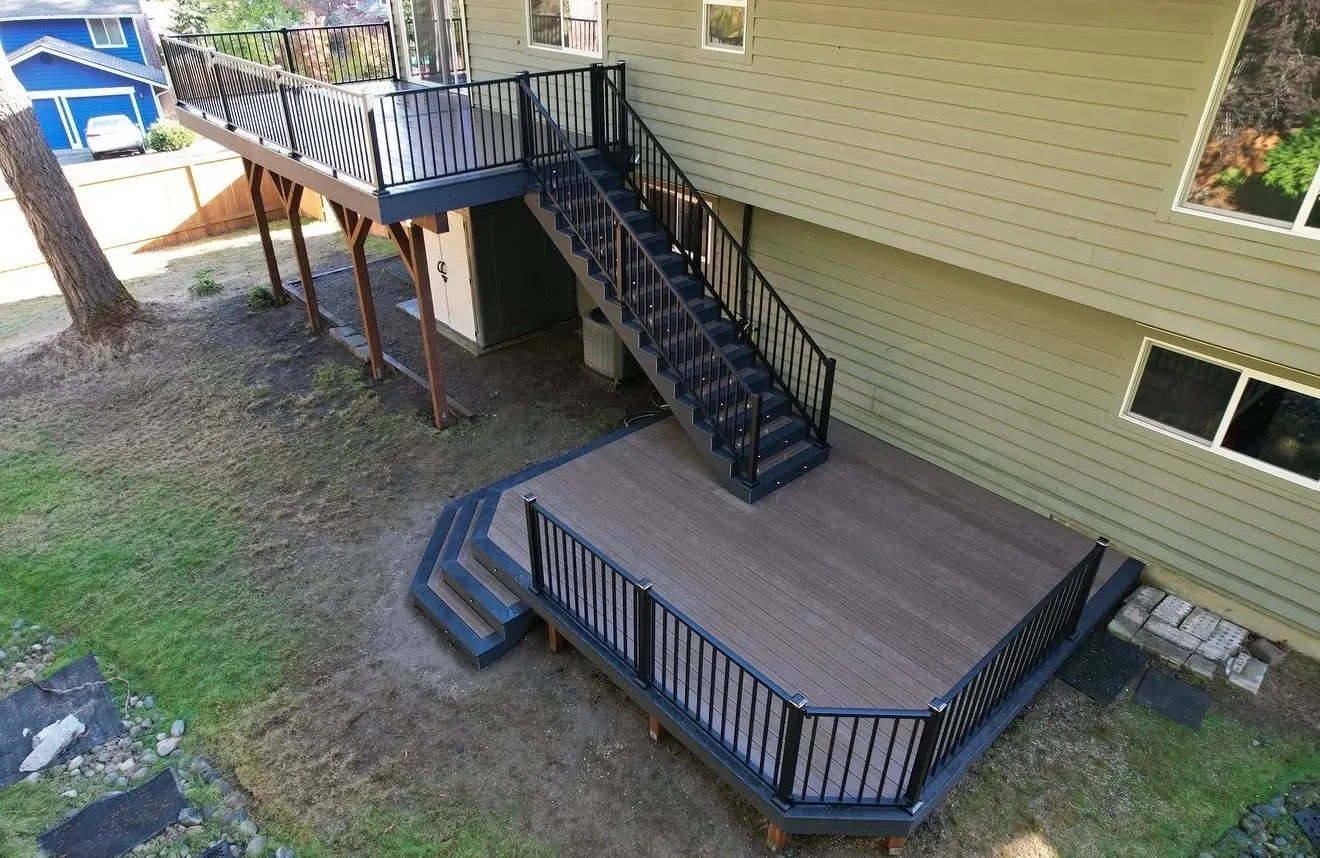
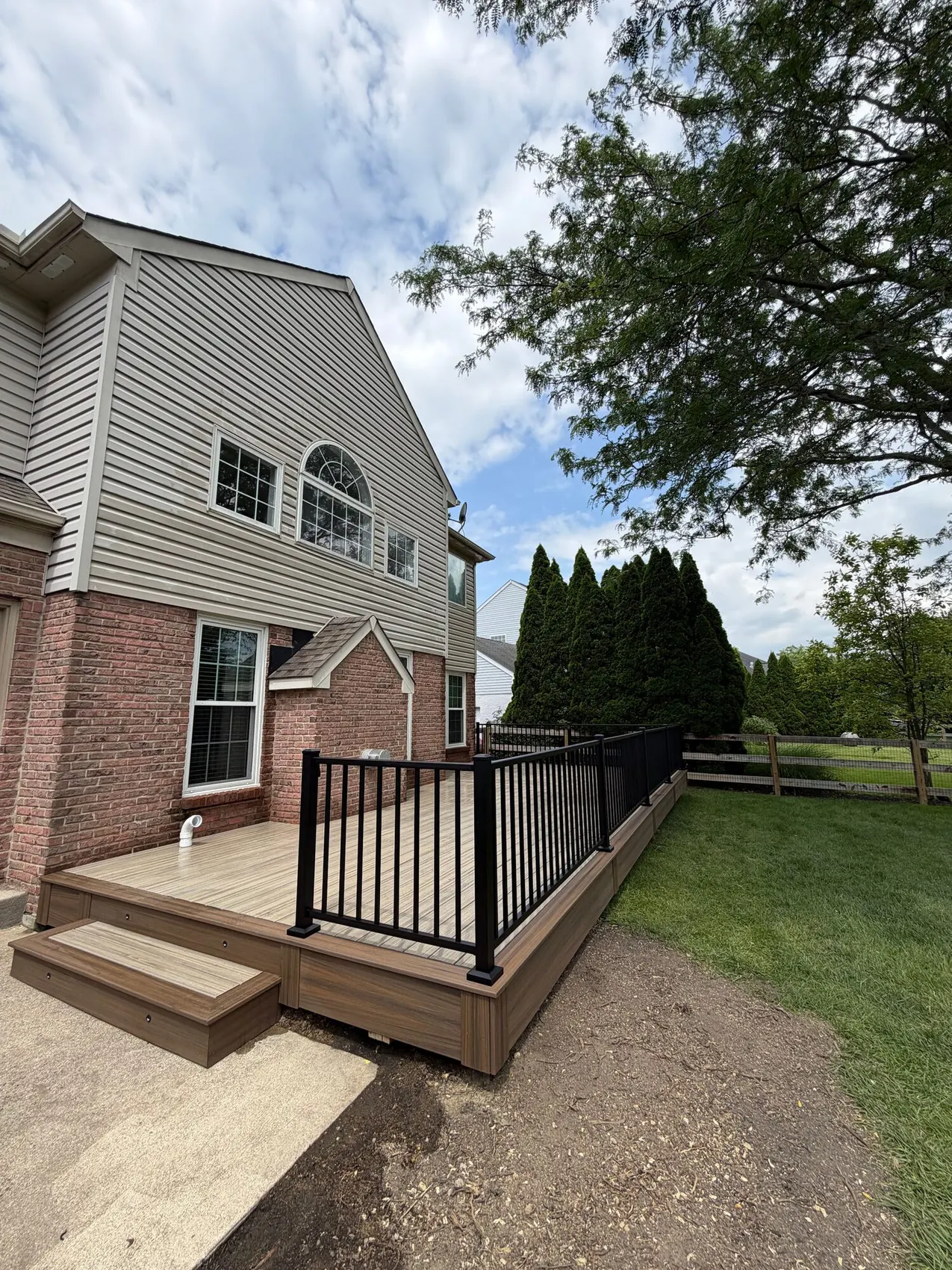
A picture frame border hides every cut end and gives the deck a finished edge instead of a row of exposed board ends. It
costs more in material and framing because the border needs blocking underneath it, and it is the single detail that most
changes how a composite deck reads.
Inlays, contrasting borders and direction changes all need to be planned before the frame is built. We work these out at the
design stage so the blocking is already there when the boards go on.
Hidden fasteners and movement
Most composite lines use hidden fasteners that clip into a groove in the board edge, so there are no screw heads in the
walking surface. Composite also expands and contracts with temperature more than wood does, so gapping at butt joints and at
the perimeter is set to the manufacturer's figures for the temperature on the day of install.