PrimeHome Improvements
It is all in the base

Paver Patios in Cincinnati

A paver patio either stays flat for decades or it starts to dip and rock within a couple of winters, and which one you get is decided entirely underneath. The pavers themselves are the easy part.

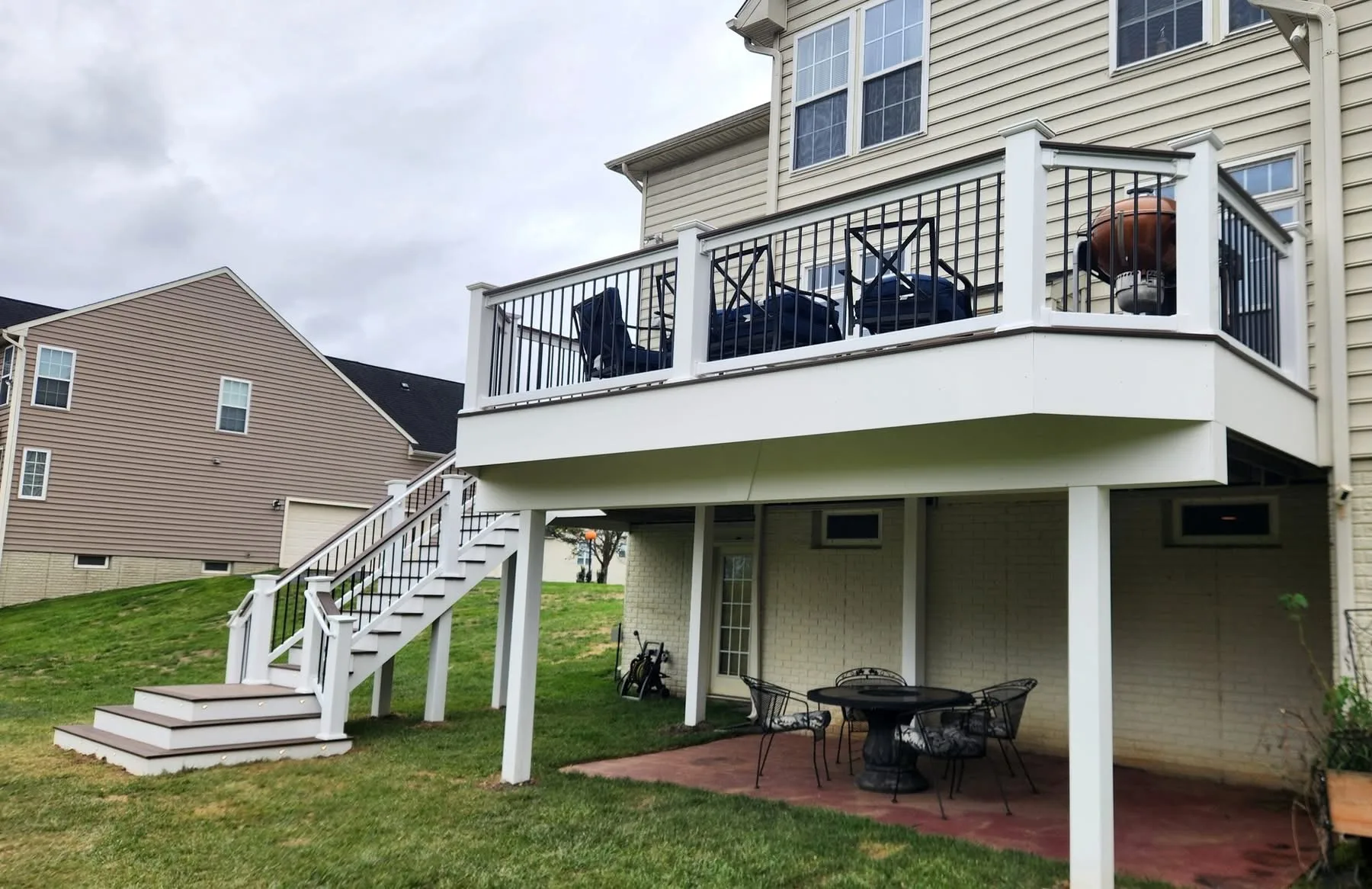
We build patios on their own and, more often, as the ground level half of a deck project, with the space under a raised deck turned into something usable rather than left as bare dirt.

  • Excavated and compacted aggregate base
  • Graded to fall away from the house
  • Edge restraint on every open edge
  • Steps, seat walls and fire pits
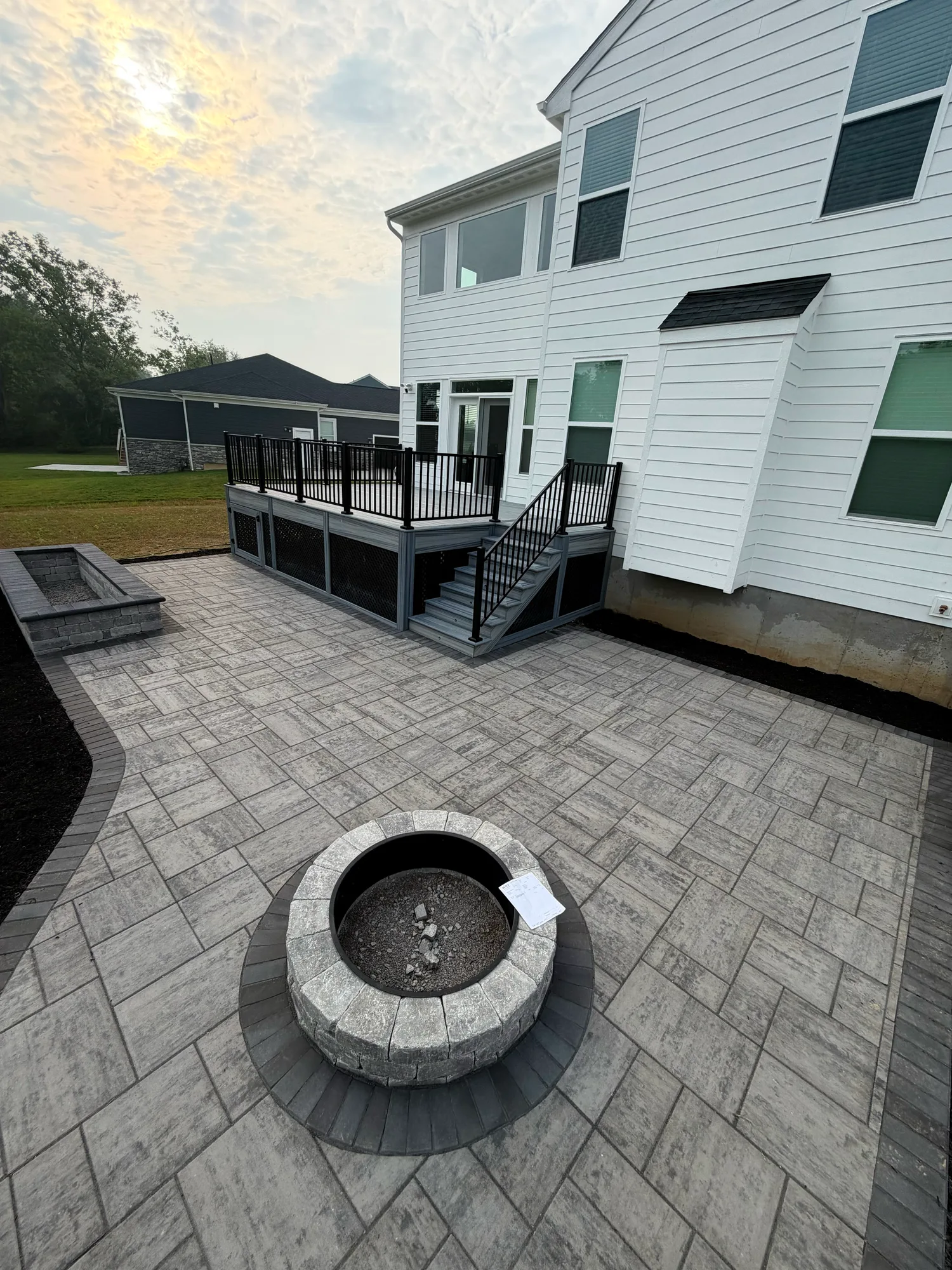
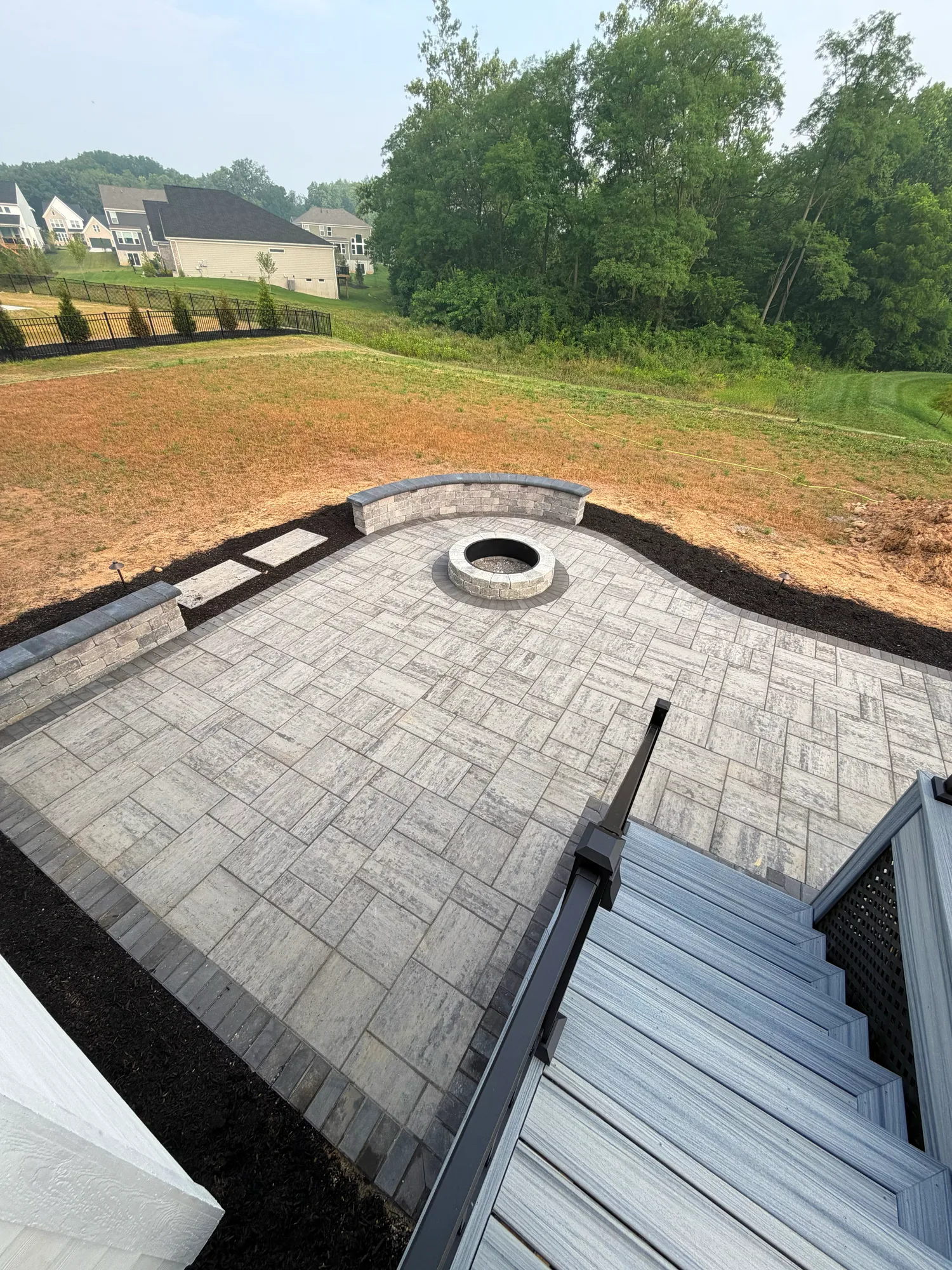
Stone fire pit on a large paver patio beside a black railed composite deck at a white sided home

The base is the whole job

We excavate to depth, lay compacted aggregate in lifts rather than in one go, and compact each lift. Depth depends on the soil and on whether anything heavier than furniture will sit on it. Skipping this is why patios move, and it is invisible on the day the last paver goes down, which is exactly why it gets skipped.

Cincinnati clay holds water, and water that freezes under a patio lifts it. Getting the base and the drainage right is not an upsell here, it is the difference between a patio that lasts and one that needs relaying.

Falls and drainage

A patio has to shed water away from the house. That fall is slight enough that you never notice it underfoot and decisive enough that rain does not stand on the surface or run back toward the foundation.

Where a patio sits below a deck, water coming off the deck above has to be dealt with as well, either with a drainage system under the deck boards or by grading the patio to carry it away.

Edges, steps and walls

Every open edge gets a restraint, because pavers with nothing holding the perimeter will spread and open joints over time. Steps up to a deck, seat walls, and fire pit surrounds are all built off the same base work and are far cheaper done at the same time than added later.

Work we have finished

Every photograph on this page is a Prime Home Improvements project, taken after the work was done.

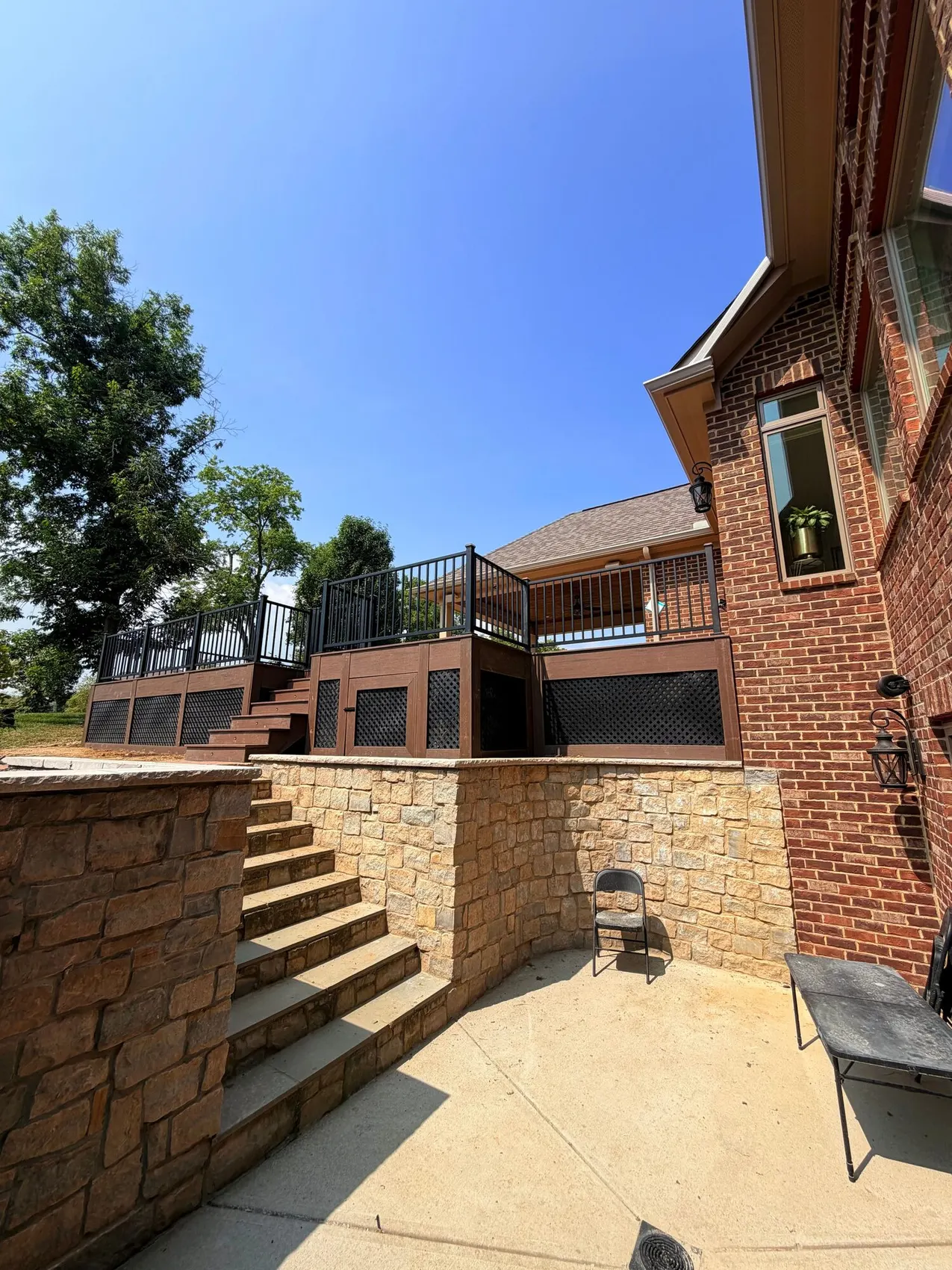
Stone retaining wall around a paver patio built under a raised deck
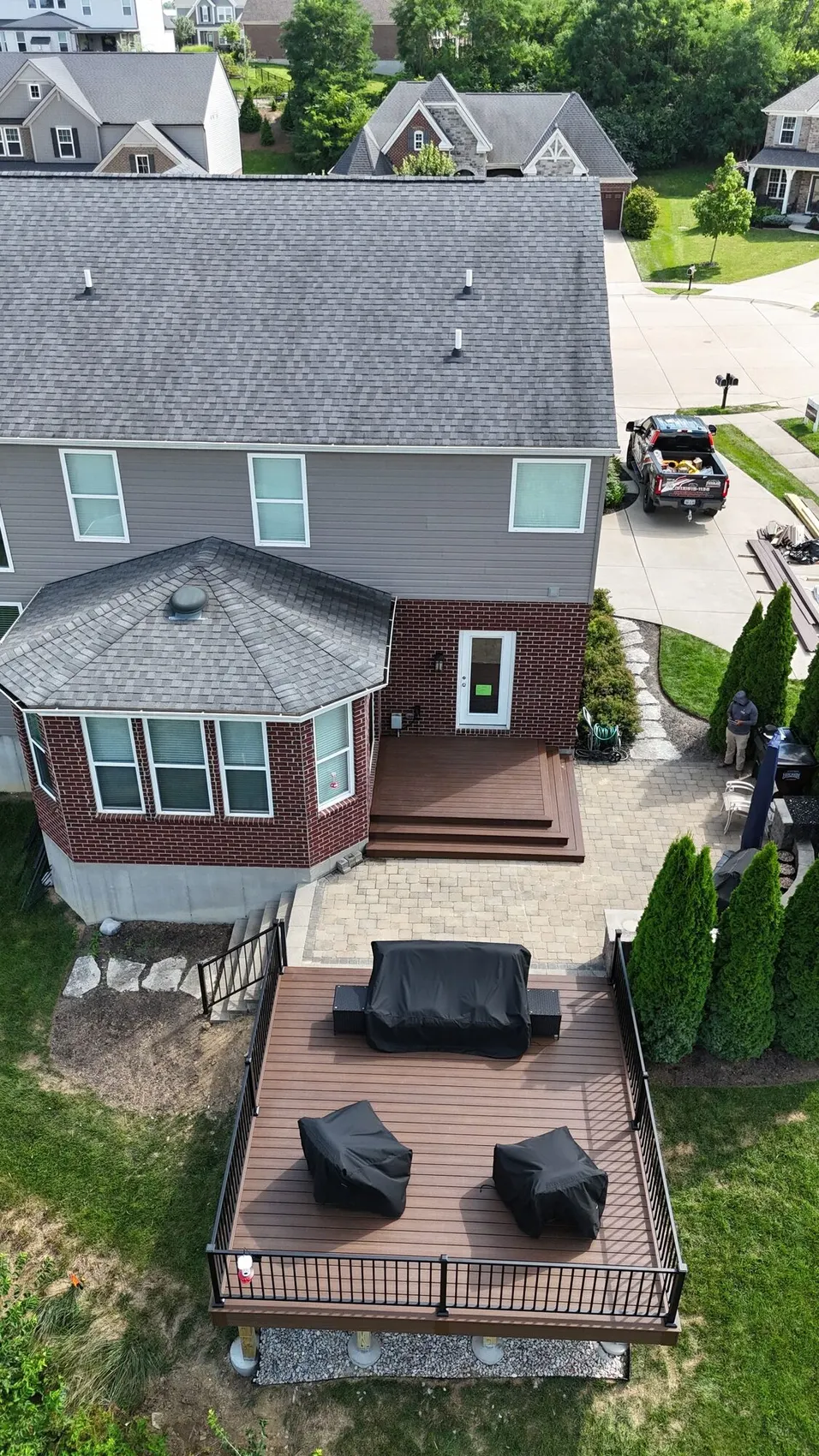
Aerial view of a composite deck and paver walkway at a brick home
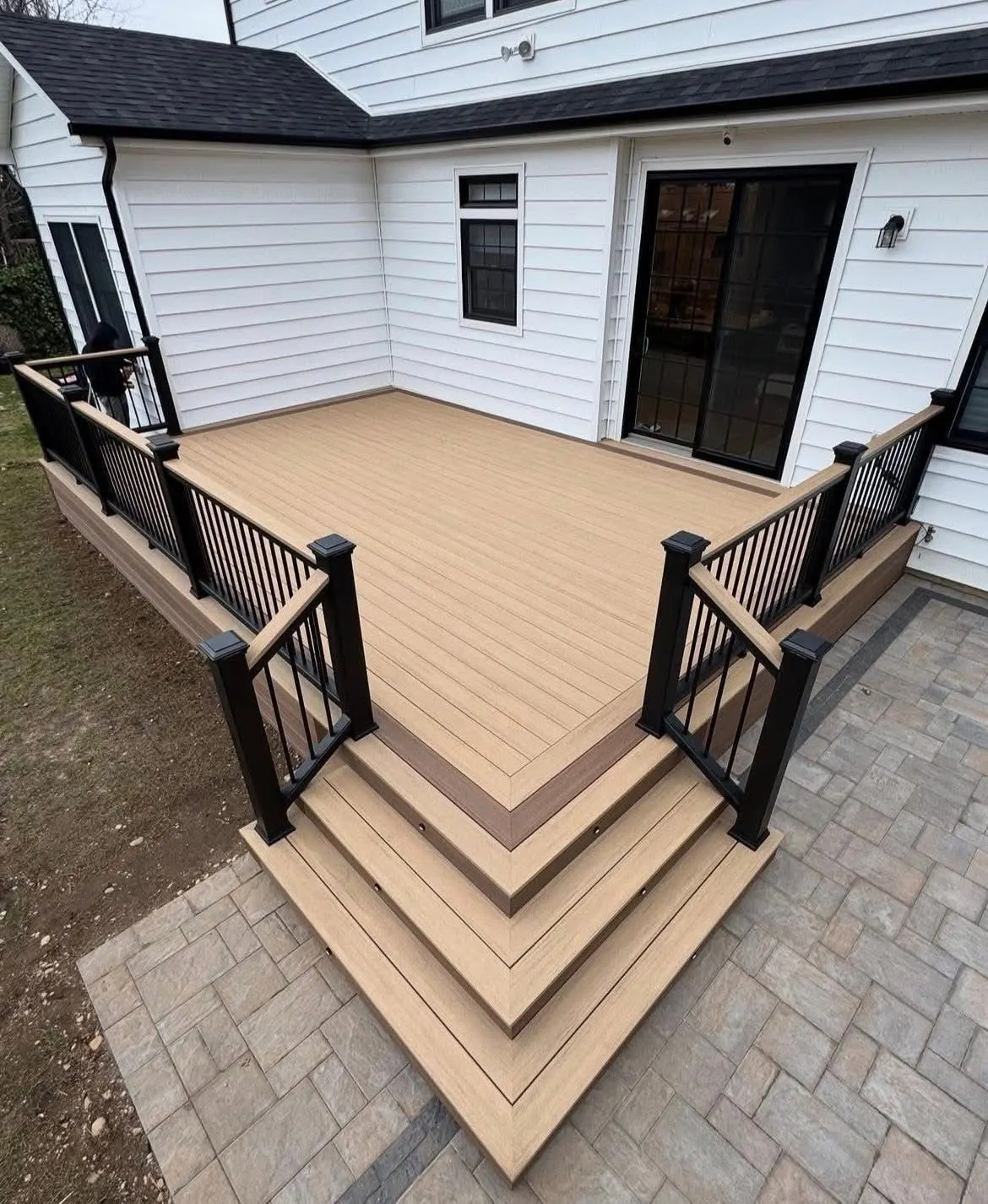
Composite deck with cascading steps down onto a paver patio
Stamped concrete patio with stone pillars at the entrance
Paver patio with a round fire pit and composite deck steps at the edge of a graded yard
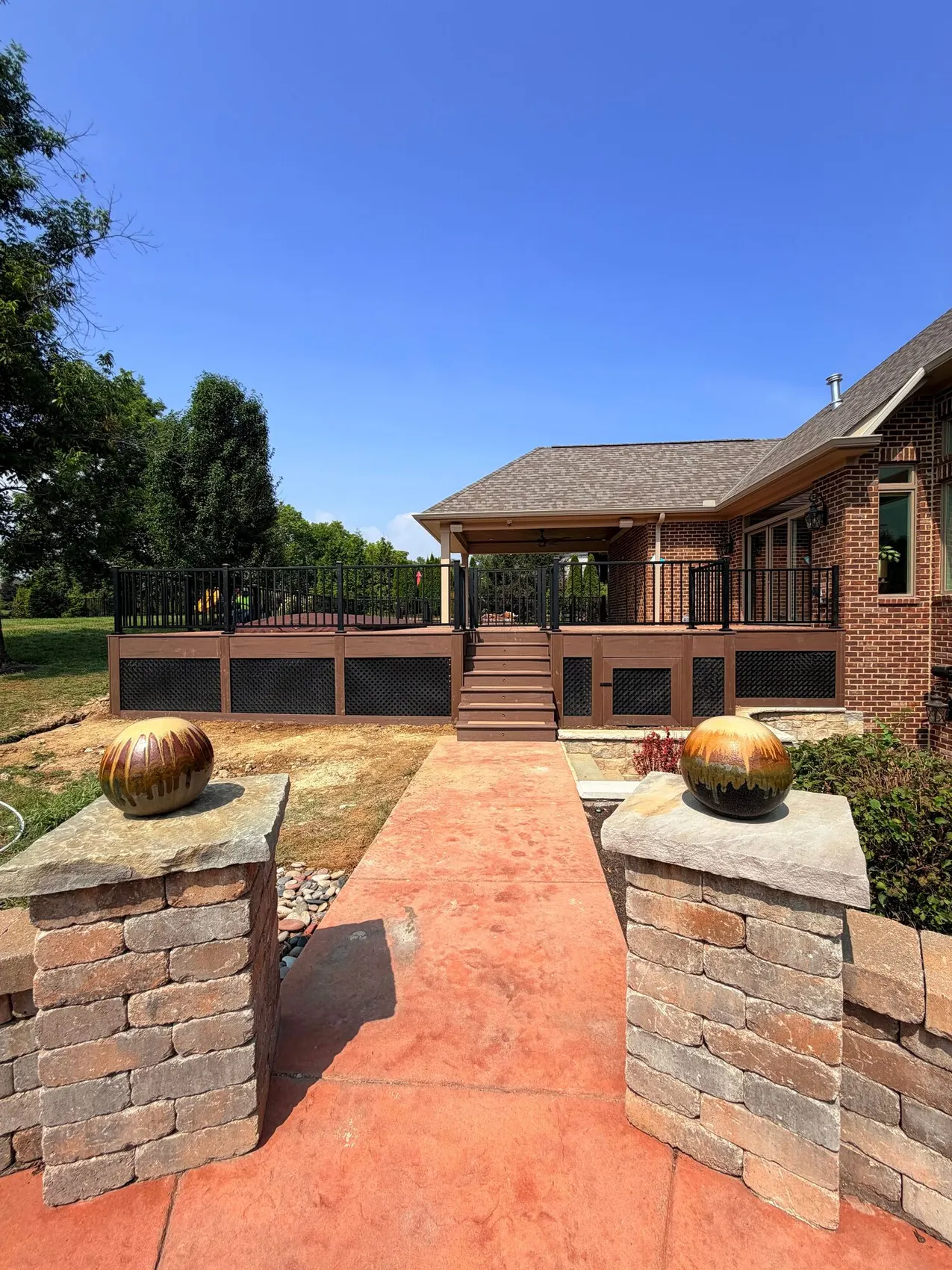
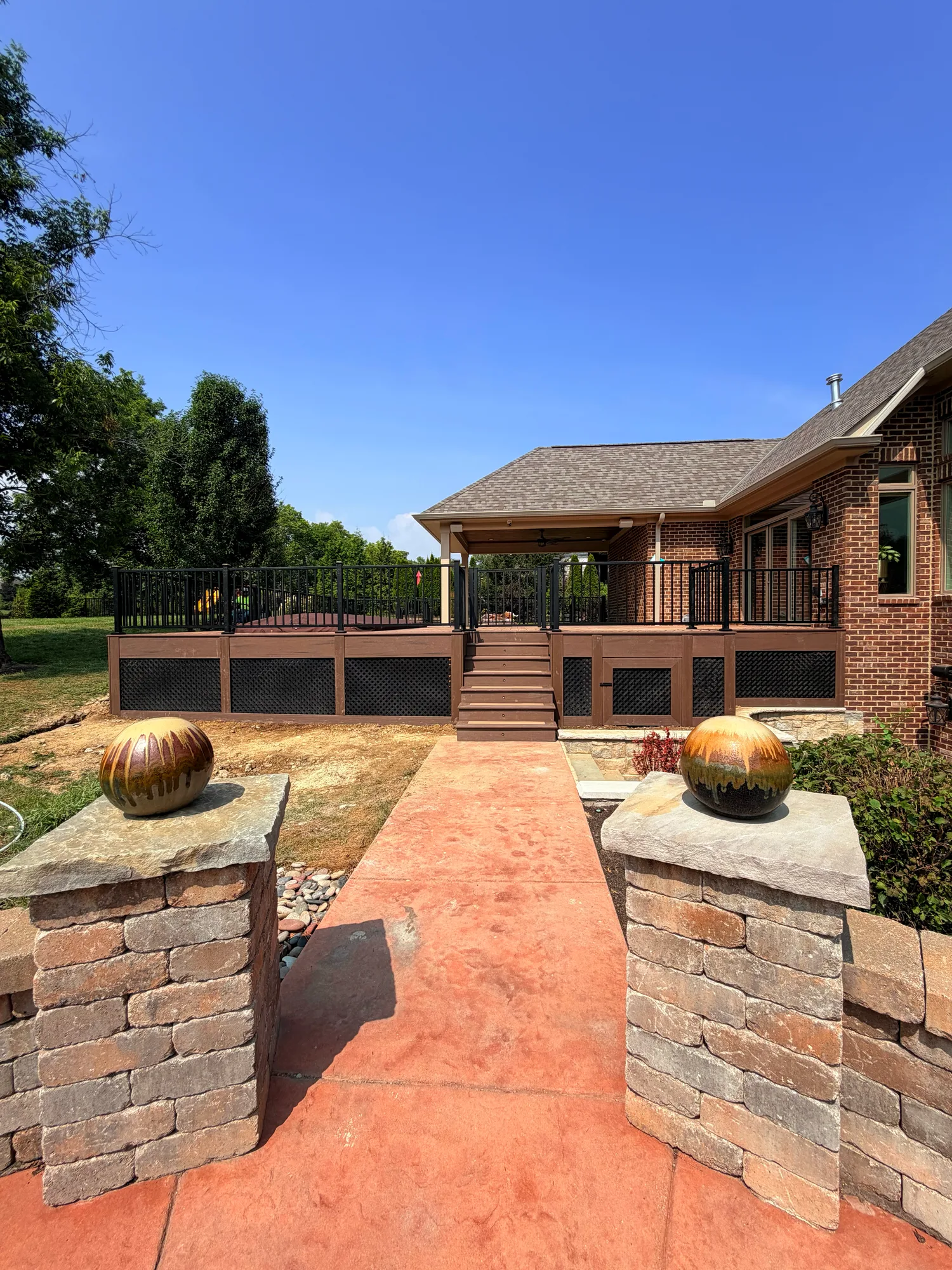
Paver walkway between stone pillars topped with copper spheres leading to a covered porch at a brick home

Build Your Dream Backyard. Pay Over Time.

Flexible financing options available through Hearth. Spread the cost of your deck or outdoor space over monthly payments instead of paying for the whole project up front.

Check Financing Options

Common questions

How long does a paver patio last?

Decades, if the base is right. Individual pavers can be lifted and reset if something does move, which is one of the advantages over poured concrete: a crack in concrete is permanent, a settled paver is a morning's work.

Pavers or poured concrete?

Concrete is cheaper to install and cracks eventually, because it is a rigid slab over ground that moves. Pavers cost more and flex with the ground instead of cracking, and they can be repaired in sections. For a patio that is the main outdoor space, we would generally point you at pavers.

Can you build a patio under my raised deck?

Yes, and it is one of the most common things we do. The main thing to resolve is what happens to water coming off the deck above, which is either handled with a drainage system under the boards or by grading the patio to carry it away.

Do paver joints need sand topping up?

Polymeric joint sand locks up when wetted and holds for years. It is worth checking after a few winters, particularly along edges and around a fire pit where it takes the most traffic.

Send us your project

Call, email, or send the form and tell us where the project is. Quotes are free.

Hours
Monday to Friday: 8:00 am to 5:00 pm. Saturday and Sunday: closed.
Area
Serving the east side of Cincinnati, the I-71 and I-75 corridors north through Warren and Butler Counties, and Northern Kentucky

Request a free quote

Tell us where the project is and what you have in mind.

Quotes are free. By submitting, you agree Prime Home Improvements may call or email you about your request.

Call Now Free Estimate